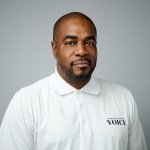
Professor, mother, wife, and investigative journalist, Nicole Carr will add a new role to her already impressive list when her first book, “The Price of Exclusion: The pursuit of healthcare in a segregated nation” (DEYST/William Morrow) debuts on June 16.
The book, Carr’s first, is described as “the untold history of Black medical professionals who have long fought to heal their communities while confronting a system built to exclude them”.
Carr has spent her career unearthing stories that, for whatever reason, were being kept in the dark. Her series of stories on school board meetings gone wrong, “Chaos at the School Board,” shone a light on how routine meetings can become the worst day in someone’s life. Investigative reporting is at the heart of “The Price of Exclusion”. Carr travels domestically and internationally in order to dive into what it took for Black physicians to break into the field. From Raleigh, North Carolina, to rural South Georgia to New York, Texas, and Port Antonio, Jamaica, the reporting in the book provides readers with stories of both victory and defeat.

In many cases, like in Hancock County, Georgia, the lack of Black doctors (in the United States, only 5% of doctors are Black) comes from the lack of a local hospital. There isn’t a full-service hospital in Hancock County, population 8,600. Residents rely on clinics and old-school remedies.
“You’ll kick rocks before you get to a hospital around here,” said Michael, one of the subjects from Hancock County in “The Price of Exclusion”.
Weaving her family’s history in the profession with historical data on other Black doctors, “The Price of Exclusion” can be described as part historical document, research tool, Black history text book, and diary.
“I’ve come to Raleigh to touch the space that I hope will explain the divide that remains today between civil rights, community health, and Black Life,” said Carr in an early chapter of the book.
Like with any book, research paper, movie script, or reported article, whenever someone digs into the American South, the KKK will make an appearance. The foundation and existence of a former Black medical school is one of many stories Carr shares in the book. There are just four Historically Black Colleges and Universities (HBCUs) medical schools in the country.
On a reporting trip to the divinity school at Shaw University in Raleigh, Carr speaks about what was once the HBCU’s medical school. “I am here because the Klan could not run Henry and Sarah Tupper from the Negro college they built,” she wrote.

Throughout the book, Carr refers to her research, reporting, and ultimately, her writing, as a calling. Near the book’s close, there is a sense of hope. Xavier University, the HBCU in New Orleans, will host the first Black medical school of this century. It’s a sign of hope, but Carr is quick to bring readers back to reality. After all, it’s her job as an investigative reporter to investigate all sides of the issue. He says that by 2036, the United States won’t have enough physicians to properly address its population’s needs.
That includes doctors of any race.
“That call can be heard whenever one dares to find what the dead have left behind – handwritten notes, maps, explanations of why they did what they did in their time,” Carr says in the book. “They often leave us answers. All we have to do is find them.”