Day 2: Living Your Dream
Education is a large part of what takes place during Disney Dreamers Academy week. For many of the dreamers, there is an opportunity to not only hear from some of their favorite actors, actresses, engineers, and celebrities but there is also a chance to receive direct mentorship for the career fields of their choice.
The Living Laboratories offers interactive career workshops that are led by Disney cast members and professionals. Along with workshops on Disney Imagineering, the culinary arts, law, marine biology, the film industry, and aerospace engineering, there was also a journalism lab.
The three dreamers who participated in the journalism lab were Ahlaysia Beasley, from Desoto, Texas, Eli Munoz, from Mesa, Arizona, and Julia Spencer, from San Antonio, Texas.
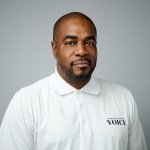
Their mentor for the three-hour session was Tony Weaver, Jr., a writer from Atlanta who began his writing journey with poetry. He later transitioned to writing for the stage. Weaver credited legendary playwright August Wilson as an early inspiration. Having been selected for an August Wilson monologue competition as a high school student, Weaver was sent to New York City to watch a reading of Wilson’s “Fences”, and was among a few students that Academy Award-winning actor Denzel Washington taught an impromptu acting class to.
“From that point on, I knew what I wanted to do with the rest of my life,” Weaver said. “I wanted to write stories that save people.”
Weaver believes stories can have a major impact on the way young people see themselves. “If you don’t figure out a way to tell the stories you want to tell sustainably, you won’t be able to tell them,” said Weaver, who also brought an advanced copy of his forthcoming book, “Weirdo” to show them. The opportunity to learn about how the publishing business and being an author works was not lost on the dreamers in attendance. Each of the dreamers had a chance to read a small description of what their writing goals were for Weaver to listen to and discuss with them.
“Some of the writing that you will be doing will not be creative,” Weaver explained. “As a writer, you have to have the discipline to do both.”

He advised the dreamers to be “authentically themselves” and that even though less than 6 percent of published authors Are Black and Hispanic, there is room for them in the literary world. Weaver recommended using social media to get their words out to the world. He also taught the dreamers about the three major publishing agencies in the country, the importance of the Publishers Weekly website, and doing research on the industry no matter what genre of writing they would like to pursue.
“As a writer, having an idea of the market you want to thrive in is a good way to succeed,” said Weaver.
Munoz and Beasley said they want to write fantasy fiction, while Spencer is interested in becoming a broadcast journalist and/or a children’s author.

One of the questions Beasley asked Weaver was whether she could have a self-published book instead of dealing with the major publishing houses. Weaver explained how much each book cost and the fact that most independent books don’t sell more than 5,000 copies.
“Even if I drove around the corner, it’s hard to carry around a thousand books,” Weaver said. “If we sell 1,500 books, and we’re making $8 per book, then you subtract the work you put in, essentially the numbers don’t get to the place where it’s sustainable.”
He added, “If you have that dog in you, then independent publishing can be for you.” Weaver also recommended acting classes for better public speaking
“You need to have confidence in what you’re doing,” he said.
Following the session Weaver was asked what he enjoys most about talking to young authors in the making. “I think youthful dreams and ambitions are really valuable and should be protected,” he said.