
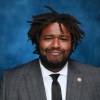

The American Black Film Festival (ABFF) partnered with the National Alliance of Mental Illness (NAMI) to host Reel Healing, a discussion on how Mental Health is depicted on film and television. The organizers are aware of the influence these mediums have, and they want to utilize the festival time to discuss normalizing mental wellness within the Black Community. NAMI and ABFF gathered medical professionals and popular stars to share why we need to remove the stigma around mental health. The group aims for attendees to leave with a greater appreciation for their mental well-being and not to underestimate the importance of mental wellness.

“I think the mind is everything. I just want people to understand the power of the mind and don’t casually go about your life thinking that your mind is not as important as it may be perceived to be,” said Da Vinci, star of BMF
The Reel Healing discussion occurred on Saturday, June 14, at the Truist Hall in the New World Center on Miami Beach. ABFF is the largest gathering of Black filmmakers in the industry. Da’Vinchi, Spider-Man Across the Spider-Verse star Shameik Moore, and NAMI associate medical director Christine M. Crawford sat on a panel in front of ABFF attendees to discuss the topic. NAMI CEO Daniel Gillison Jr. moderated the discussion.
“It’s powerful being here at ABFF, meeting the talent, and talking with them and the audience. It’s a force multiplier that amplifies what needs to occur when we talk about full health and mental health,” said Gillison Jr.
The conversation dove into the mental toll Hollywood takes on actors and actresses. Moore and Da’Vinchi shared how they limit their social media use. Passionate fans frequently contacted them online to share their love and criticism of the actors’ work. Some negative comments have crossed boundaries, and both must remain silent, so they don’t end up on the news and appear to be the bad guys.


“I try to guard my mind and stay rooted in truth while not exposing it too much online. I try to keep myself in a state of learning. One author mentioned in a book that we must train our minds the same way athletes train their bodies for optimal performance. Anything that is not in alignment with that, I try to keep away,” Da’Vinchi said to the crowd.
Gillison Jr. explains how fans often overlook the actor’s current status. He explains that fans watch the latest projects of actors and actresses but are unaware of how long ago they were made. Most of the time, they are looking for their next role, and possibly, their livelihood depends on it.
“The stress that many of our actors navigate in terms of being able to continue to work, and some can pay their bills and other family members’ bills, and some of them can’t pay their bills. So, the stress is pretty real, ” said Gillison Jr.
The conversation shifted to how Moore and Da’Vinchi accept roles with mental health challenges. Da’Vinchi explains that his life experiences have allowed him to adapt to the roles in his career. He said that roles have spirits in them, and if he feels that a Character’s role is something he doesn’t feel comfortable with spiritually, he will pass on it.
Moore’s explanation of the roles he chooses is tied to his personal connection with the character. He elaborates that he is a method actor who finds himself in the roles. When he received more serious, darker roles, he would listen to dark rap to tap into that version of himself for the character. He believes this is a necessary step and a way to preserve one’s identity.
“I listen to the music that is the theme of the version of myself that I’m playing. I listen to dark rap and music because I believe it’s necessary. Honestly, I would rather be the warrior in the garden than somebody who’s just super peaceful. I think it’s important to know how to deal with men and women with darker mentalities than the nature of my own. Doesn’t mean I need to lose myself, but I can explore because I’m an actor,” said Moore.
The Reel Healing discussion allowed ABFF attendees to peek behind the curtain at how Moore and Da Vinci dealt with Hollywood and mental health. Through the conversation, Moore shared how he wants to create Infrastructure for culturally impactful projects to give back to Black and Hispanic communities. Spider-Man: Into the Spider-Verse and Spider-Man: Across the Spider-Verse were huge films for both communities. Yet, none of the movie revenue returned to Black and Brown communities, and Moore wants to change that. Da Vinci shared that he is working on a book about mental health and plans to conduct additional mental health tours to discuss the subject.